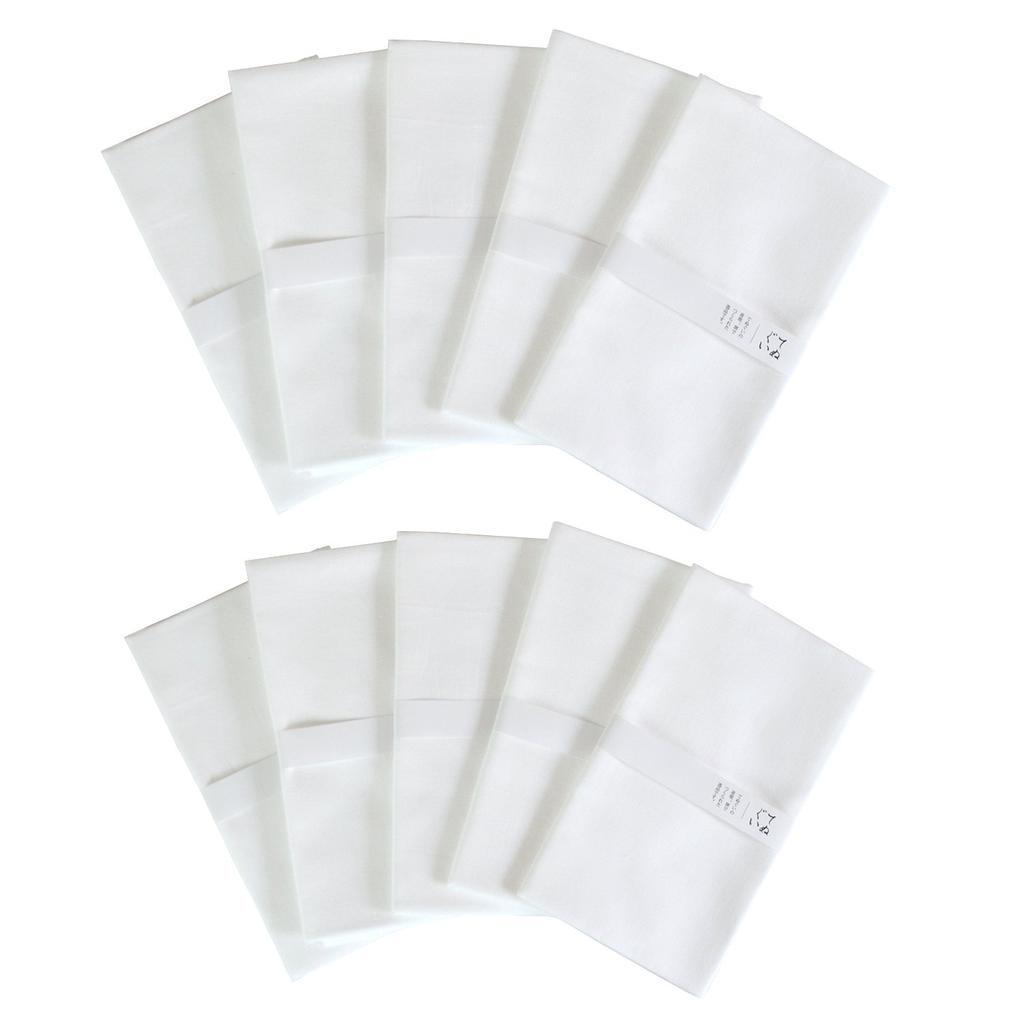
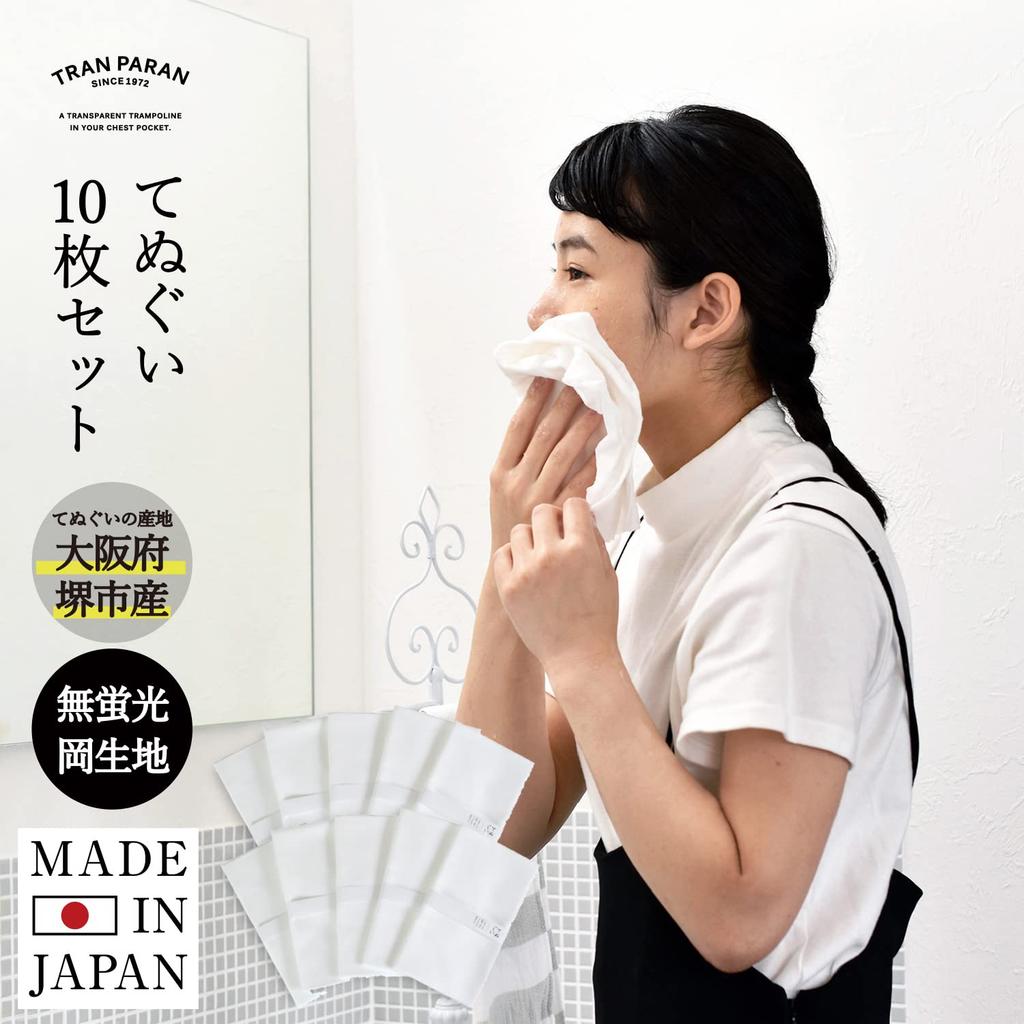
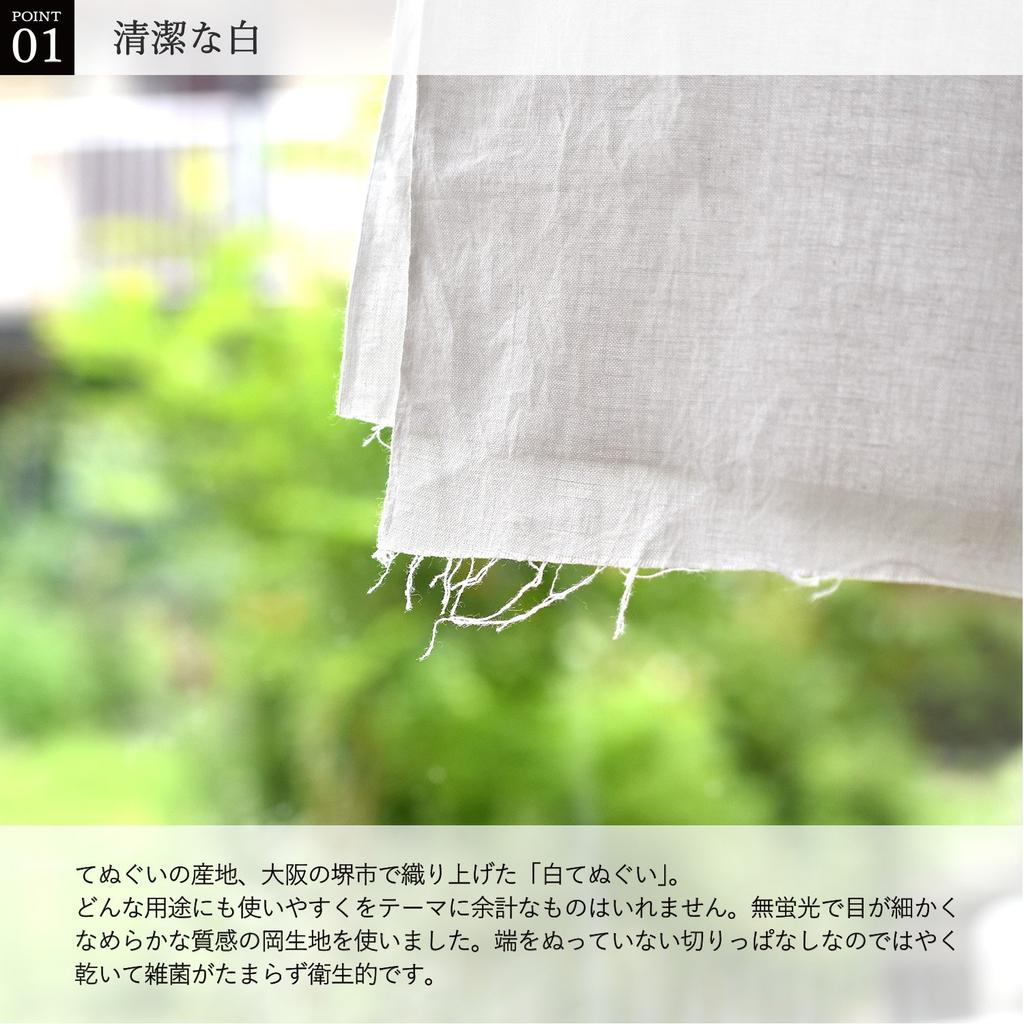
【Clean White】A white tenugui woven in Sakai City, Osaka, a renowned production area for tenugui. Designed with ease of use in mind for any purpose, it features a simple, unadorned fabric. Made with a finely woven, smooth, non-fluorescent Oka fabric. Especially recommended for use in cooking or washing your face.
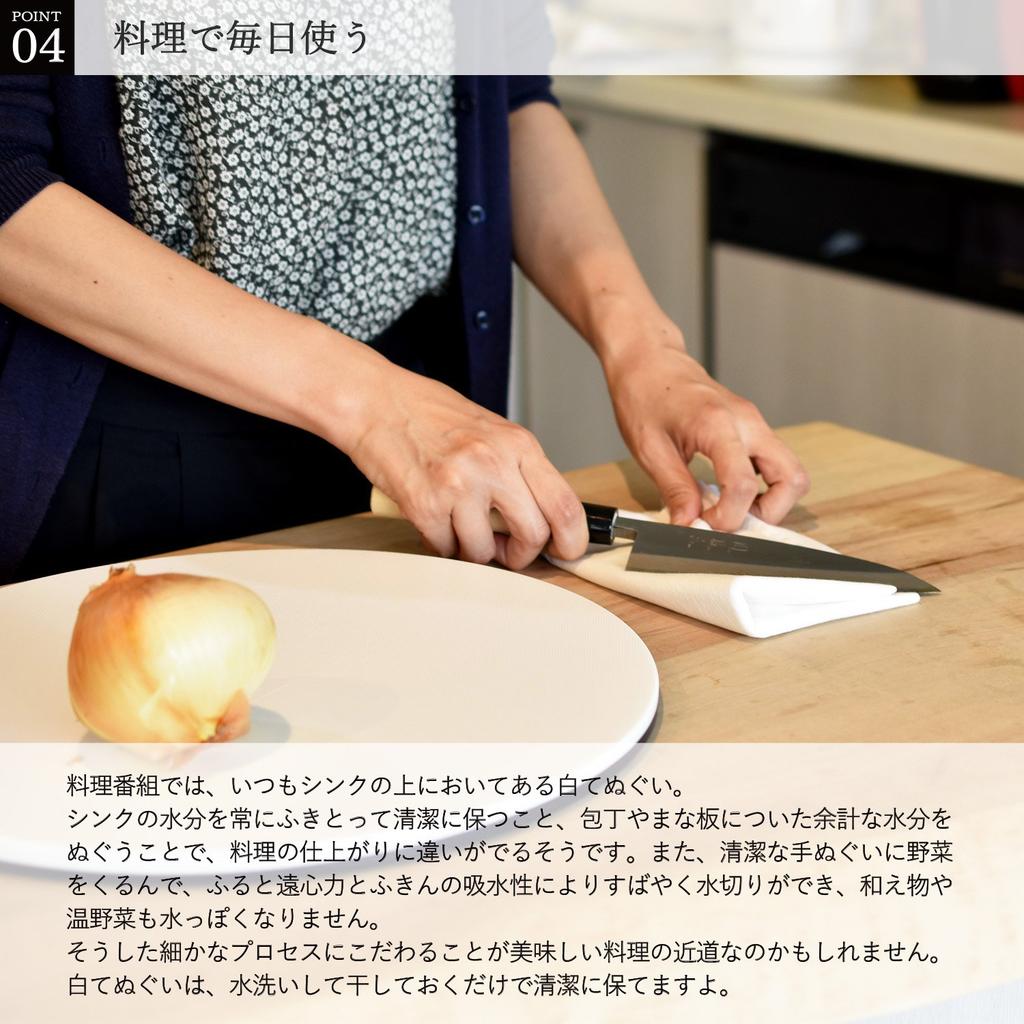
[Everyday Use in Cooking] In cooking shows, there's always a white hand towel sitting on the sink. The instructors quickly wipe the wet sink or carefully wipe the knife after each cut. I've always been captivated by their beautiful movements. Apparently, keeping the sink clean by constantly wiping away moisture while cooking, and wiping away excess moisture from knives and cutting boards, makes a difference in the final result of the dish. Since professionals do it, we can try to incorporate what we can at home. Paying attention to such small processes might be the shortcut to delicious cooking.
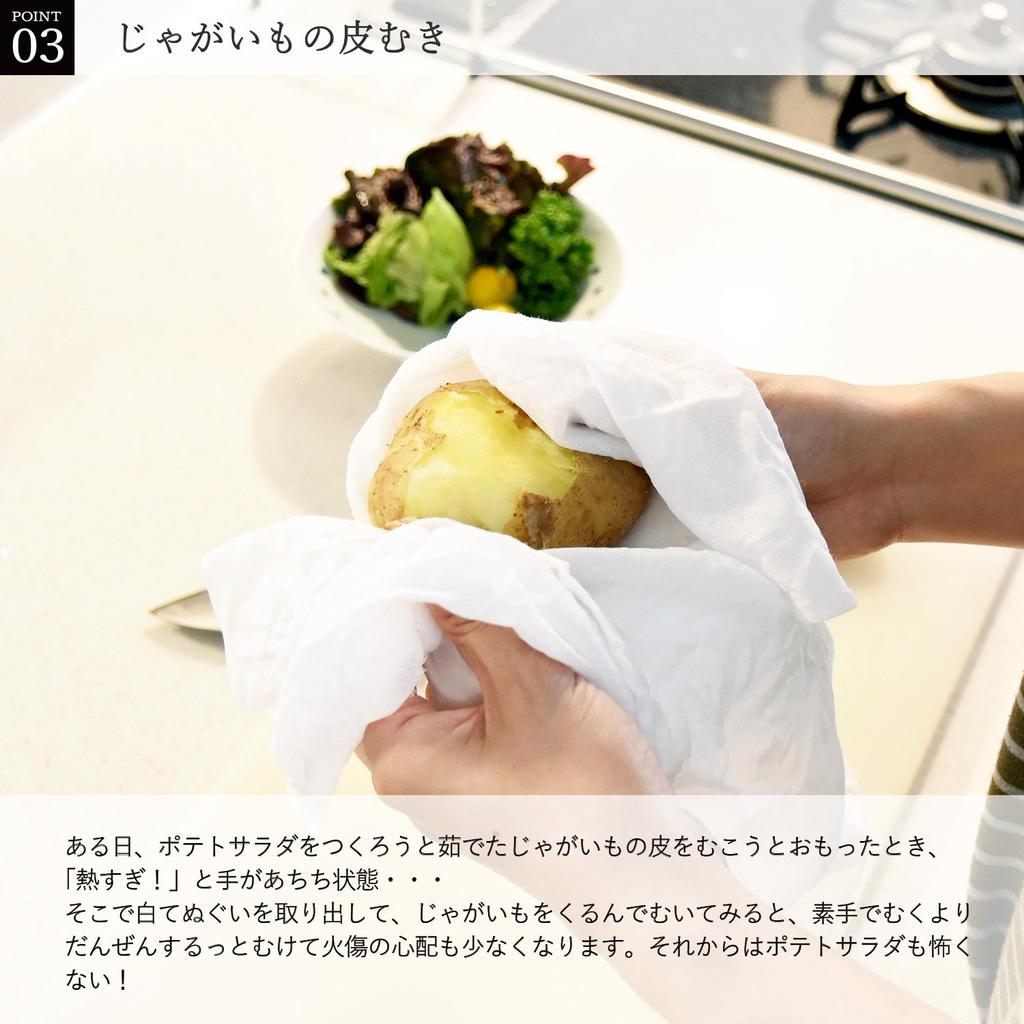
[Recommended for draining vegetables] Generally, people drain vegetables using a salad spinner or a bowl and colander, but if you wrap the vegetables in a clean white tenugui (Japanese hand towel) and shake it, the centrifugal force and the absorbency of the towel will drain the water quickly. Ever since I learned this, I've been using a white tenugui for draining vegetables. It doesn't take up much space and doesn't create extra dishes to wash. You can even drain hot boiled vegetables with ease, so salads and steamed vegetables don't become watery. It's also great for draining tofu. For draining vegetables, a white tenugui can be kept clean just by rinsing it with water and letting it dry. When peeling potatoes, wrapping them in a tenugui prevents them from getting hot. It's much easier to peel them than with your bare hands.
[Tenugui Face Washing] I'll share a secret tip I actually heard from a tenugui (Japanese hand towel) manufacturer. Apparently, the extremely fine fabric of a tenugui has very fine fibers, and when you wash with it, it removes dirt from pores and excess dead skin cells, leaving your skin smooth. It's an amazing face washing method that even removes heavy makeup easily. Moreover, because the edges are not sewn and are left raw, it dries quickly and is hygienic as bacteria do not accumulate. I was reminded that there is a good reason why things have been used for so long. The washing method is simple; all you need is a tenugui and ordinary soap. The key is to use a gentle, stroking motion. Scrubbing too hard will damage your skin, so just be careful about that when you wash, and you'll be on your first step towards smooth skin.
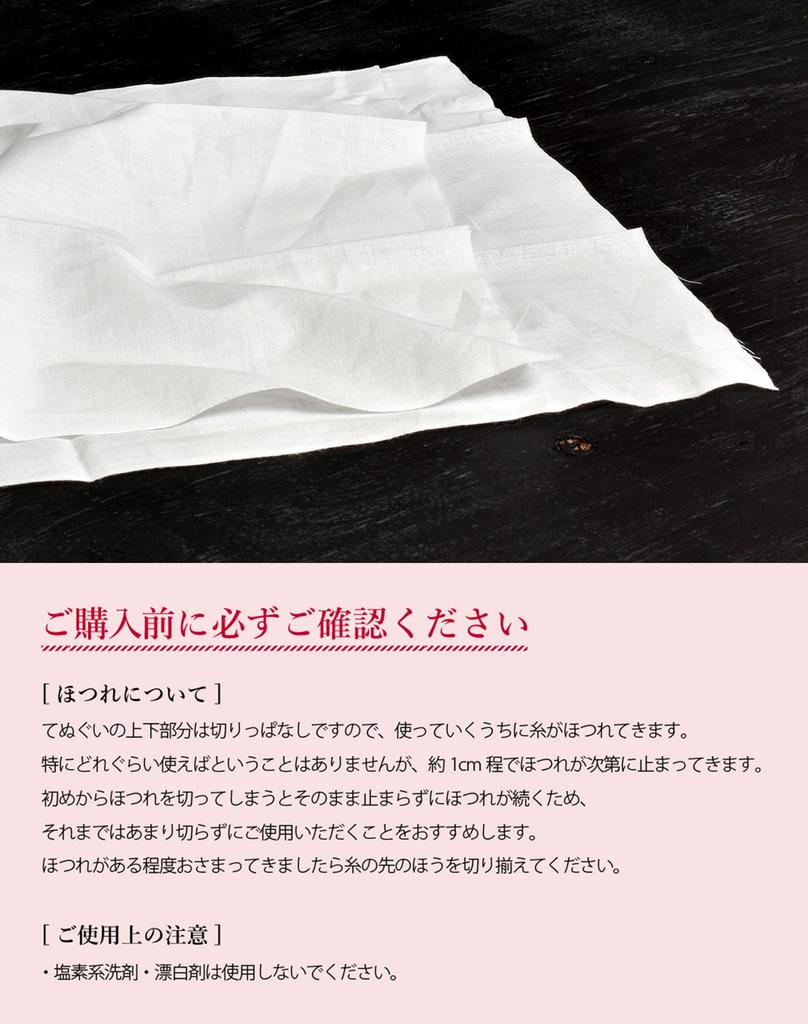
[Size] Approx. 34cm x 90cm [Weight] Approx. 32g per piece [Material] 100% cotton (no fluorescent whitening agents that affect the human body are used) [Production area] Osaka Prefecture, Japan [Note] This tenugui has a traditional raw-cut finish at the top and bottom edges. As you trim the loose threads, it will gradually become less prone to fraying around 5mm from the edge.
This "white tenugui" is woven in Sakai City, Osaka, a region famous for its tenugui production.
The theme is ease of use for any purpose, so we've kept it simple and eliminated anything unnecessary.
We used a non-fluorescent, finely woven, and smooth-textured Oka fabric.
It's especially recommended for use in cooking and face washing.
Generally, a salad spinner is used to drain water from vegetables.
Alternatively, I think you could use a bowl and a colander.
Wrap the vegetables in a clean white hand towel.
Shaking it allows you to quickly drain the water using centrifugal force and the absorbency of the cloth.
Since learning this, I've always preferred using a white tenugui (Japanese hand towel) for draining dishes.
It doesn't take up much space, and it doesn't create extra dishes to wash.
It can easily drain the water from hot, freshly boiled vegetables,
Salads and steamed vegetables won't become watery.
Draining the tofu is also recommended.
For draining water from vegetables, a white tenugui (Japanese hand towel) is fine.
You can keep it clean by simply washing it with water and letting it dry.
I'll share some insider tips I actually learned from a tenugui (Japanese hand towel) manufacturer.
Surprisingly, the extremely fine fabric of the tenugui (Japanese hand towel) has very fine fibers, and when you wash it...
It's said to remove dirt from pores and excess dead skin cells, leaving your skin smooth.
This is an amazing face-washing method that removes even heavy makeup with ease.
Moreover, since the edges are left unfinished and unpainted, it dries quickly, preventing bacteria from accumulating and making it hygienic.
I was reminded that there's a good reason why things have been used for so long.
Washing is easy.
All you need is a hand towel and some regular soap.
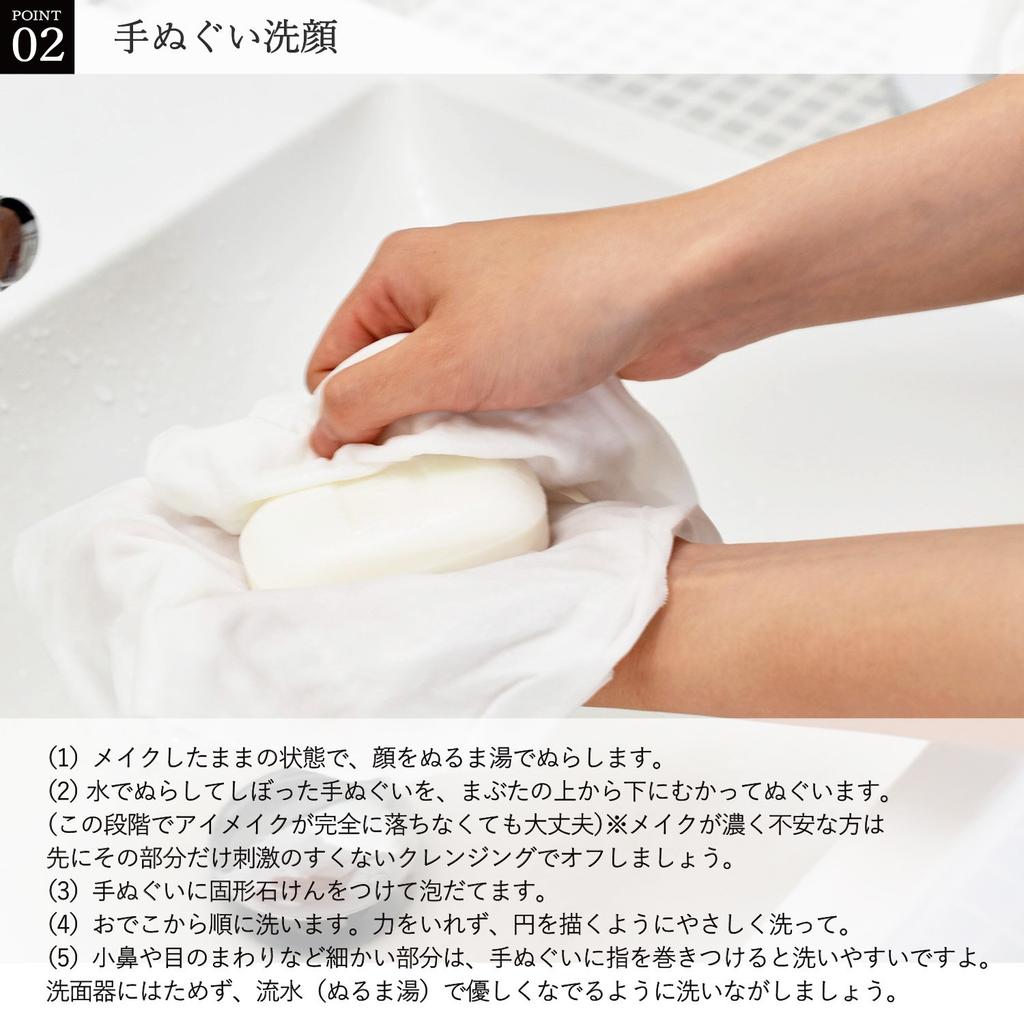
(1) With your makeup still on, wet your face with lukewarm water.
(2) Wipe your eyelids from top to bottom with a damp, wrung-out hand towel.
(It's okay if your eye makeup isn't completely gone at this stage.)
*If you have heavy makeup and are worried, first remove it from that area with a mild cleanser.
(3) Put some bar soap on a hand towel and lather it up.
(4) Start washing from your forehead. Wash gently in a circular motion without applying too much pressure.
(5) For smaller areas like the sides of the nose and around the eyes, it's easier to wash them by wrapping your fingers in a hand towel.
Do not collect the water in a basin; rinse it off with running water (lukewarm water).
The key is to use a gentle, stroking motion.
If you scrub too hard, you will damage your skin, so just be careful not to do that when you wash.
This is the first step towards smooth skin for everyone.


 No-delivery refund


![[OFT] Mega Tray Dedicated Liner (10 Sheets) with White Tags](https://img.joomcdn.net/2543a6b9bd7b6a5f17999121300500e95038803a_100_80.jpeg)




![Value for Plain White Tenugui Hand 36 X 100 Cm [Best Money] (Japanese Towel), High-Quality Cotton, Approx. (5 Pieces)](https://img.joomcdn.net/02b09bd24f5b26c10b3ca7a18050a2a1228fa47f_95_100.jpeg)