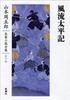
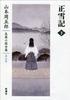
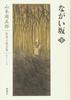
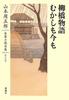
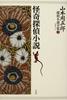
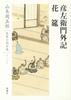
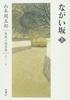
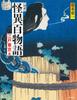
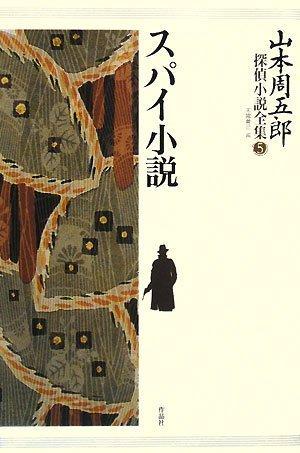
Yamamoto Shugoro's detective novels were featured in the September 1975 issue of the magazine "Gen'ei-jo," featuring the reprinting of four of his works and an essay by Kimura Hisanori titled "Yamamoto Shugoro's Mysteries," so long-time detective novel fans will likely be familiar with his work. However, the only detective novels by Yamamoto Shugoro that are readily available today are the series "Sleeping Police Chief," published under a pseudonym by a masked author, and a few stories, such as "The Devil's Hand of the Black Collared Gang" and "The Cat's Eye Lens Incident," collected in a collection of short stories published by Shincho Bunko. Considering that many of his works remain buried in magazines, it cannot be said that there has been any progress in reevaluating Yamamoto Shugoro's detective novels.
The delay in reprinting Yamamoto Shugoro's detective novels likely stems largely from the fact that they were published in Hakubunkan's boys' and girls' magazines, which are widely dispersed and rarely held by public institutions. In publishing The Complete Works of Yamamoto Shugoro Detective Stories, we have researched as many magazines in which Yamamoto Shugoro was active before the war as possible, including Shojo Sekai, Shonen Shojo Tankai, and Shin Shonen, and have compiled over 60 works. Although a few works could not be included because the magazines could not be found, this complete collection should provide an overview of the full range of detective fiction left by Yamamoto Shugoro.
The full-length detective stories published in prewar boys' magazines are thrilling adventures in which the protagonist battles evil organizations, set in places such as mainland China (East of the Urals, Blood History of Kerlen Castle), the South Seas (The Southern Cross), and even Ethiopia suffering under Italian oppression (Under the Lion King's Flag), and are of a level of completion that rivals or is inferior to the masterpieces of Yamanaka Minetaro. Meanwhile, as the titles of his short stories—"Ghost Hotel," "Wilderness of Killing Valley," and "The Mystery of the Newly Built Ship"—indicate, the bizarre and fantastical mysteries at the beginning are fully-fledged detective stories that are rationally solved, making them a timeless read even today. For this reason, mystery fans will appreciate Yamamoto Shugoro's solid skills as a detective writer, while longtime fans will discover new appeal in his work—the origins of this unparalleled storyteller who left behind masterpieces such as "The Five-Bowed Camellia" and "The Fir Tree Remains." Furthermore, in recent years, Japanese literary studies have focused on popular literature, novels for boys and girls, and works written during the war. Reprinting Yamamoto Shugoro's detective stories, which fill a gap in the history of mystery and children's literature, will also benefit the latest literary research. Furthermore, by supplementing the bibliographical data on Yamamoto Shugoro that Kimura Kuninori has been keeping for a long time, we will be able to learn about his activities immediately after his debut, which have not been discussed much until now, and we believe that this will shed new light on research into Yamamoto Shugoro. (Suekuni Yoshimi)


 No-delivery refund